
A bit about Vietnam’s Arabica
I’m drinking my morning coffee as the sun pushes its way over the horizon. That soft orange light makes the streets look kinder than they usually are. Scooters hum awake, metal shutters rattle open, and the city pretends, briefly, that it isn’t in a hurry.
The cup in my hand is Arabica from Lâm Đồng.
It’s not a place that shows up in most travel brochures unless someone is selling a honeymoon fantasy. Foggy hills. Strawberry farms. Clean angles for photos. Strip all that away and you’re left with one of the quiet pillars of Vietnam’s coffee story.
Arabica didn’t start here.
It was brought.
The French carried it in, bundled with colonial ambition, alongside railroads, architecture, and the belief that progress always arrives from elsewhere. Whether that history feels complicated, painful, or both depends on who you ask. None of that changes what happened next.
History doesn’t ask permission before laying down roots.
Arabica took one look around Vietnam and decided to stay.
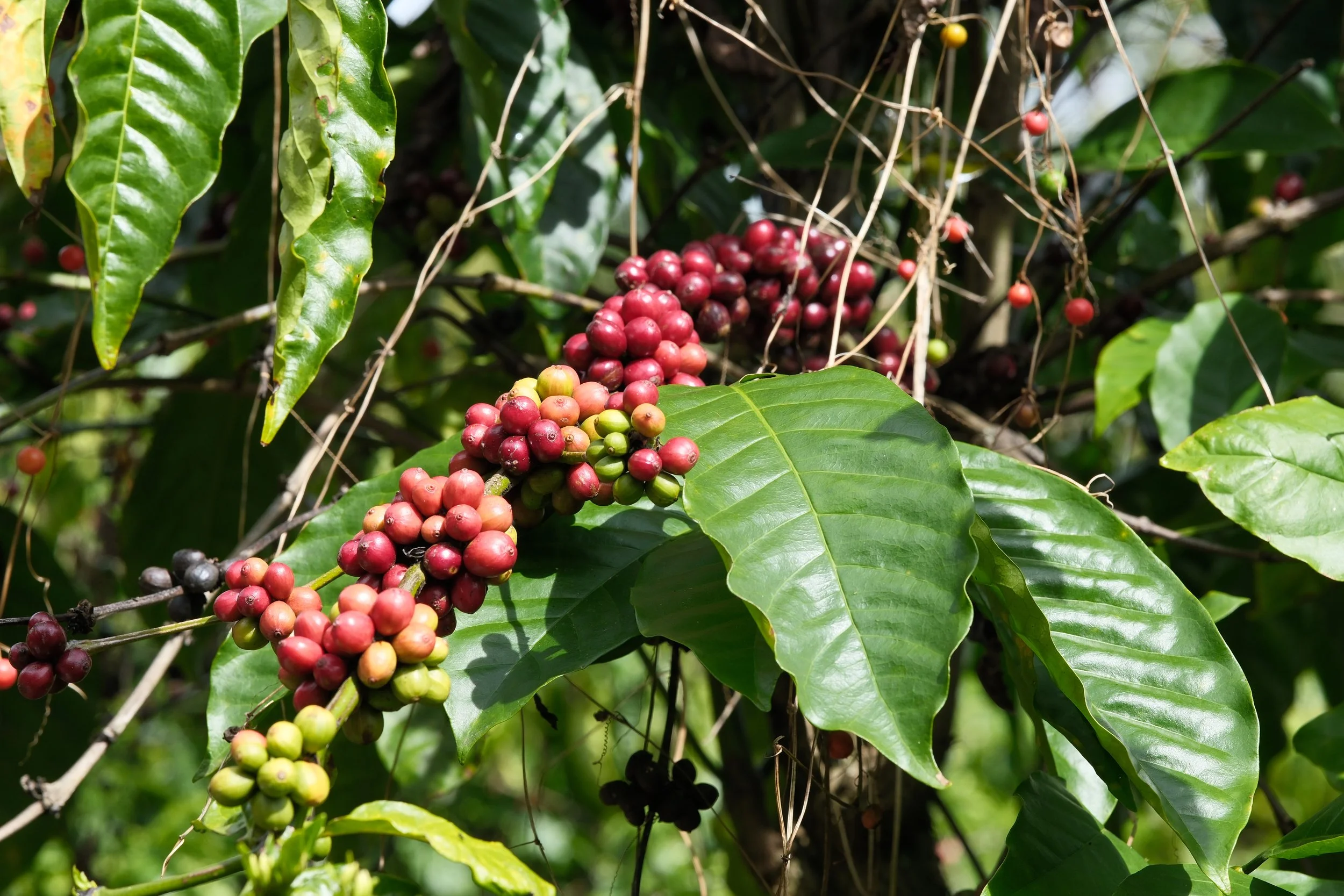
It just didn’t stay everywhere.
The lowlands were too hot. Too humid. Too generous with pests and disease. Coffee is picky like that. It wants altitude, cool nights, and soil shaped by old volcanic fire. It wants struggle, but not chaos.
So Arabica climbed.
It moved upward through the Central Highlands, failing in some places and tolerating others, until it reached Lâm Đồng. That’s where things finally made sense.
Basalt-rich soil that held water just long enough.
Cool nights that slowed cherry development and deepened sugars.
Morning fog that lingered without suffocating.
Sunlight that burned through gently, like it knew when to stop.
From a scientific standpoint, it works. Altitude, rainfall, temperature variance, soil chemistry. The variables line up cleanly. An equation that balances.
If Carl Sagan were here, he’d probably smile at the idea that a small coffee seed could be the final expression of geology, climate, colonial movement, and human persistence. A quiet intersection of forces, ending in a sip.
Not everyone noticed.
For decades, Vietnamese Arabica was dismissed. Overshadowed by bulk production and flattened by lazy assumptions. There’s a global bias in coffee that says quality only comes from certain latitudes and certain names, preferably ones that sound poetic when spoken slowly.
You know the type of thinking. Coffee should taste like citrus peel and flowers, or it somehow doesn’t count. God forbid it tastes like chocolate. Someone might start asking questions.
Meanwhile, Lâm Đồng just kept going.
Quietly.
Patiently.
Without asking for approval.
Farmers built terraces into hillsides. They learned shade management through trial and error. They experimented with processing long before anyone called it innovative. They worked trees planted by their parents and grandparents, often without knowing if the market would ever care.
Coffee didn’t just adapt to Lâm Đồng.
It reshaped it.
Drive through the region today and you’ll see it. Hills carved into order. Rows of trees bending under cherries. Tarps covered in drying parchment. The smell of wet earth and fermentation hanging in the air. It isn’t romantic. It’s honest. It’s work.
Coffee gave the region an economy.
Then an identity.
And eventually, a reputation.
That’s why this cup matters to me.
Vietnamese Arabica isn’t an imitation of anyone else’s story. It isn’t Ethiopia’s shadow or Colombia’s understudy. It arrived under questionable circumstances, was refined by local hands, and strengthened by climate and patience.
There’s a small rebellion in every bean.
If you’ve tasted Lâm Đồng Arabica before, you know it. Cocoa warmth. Gentle fruit. Acidity that knows when to behave. Coffee with a sense of place, not a lecture.
And if you haven’t, you will.
Anyway, that’s what I’m thinking about over this cup.
Thanks for sitting down with me for a few minutes.
Tommie Vo
2 Jan 2026
